
Omnistamp Start a project
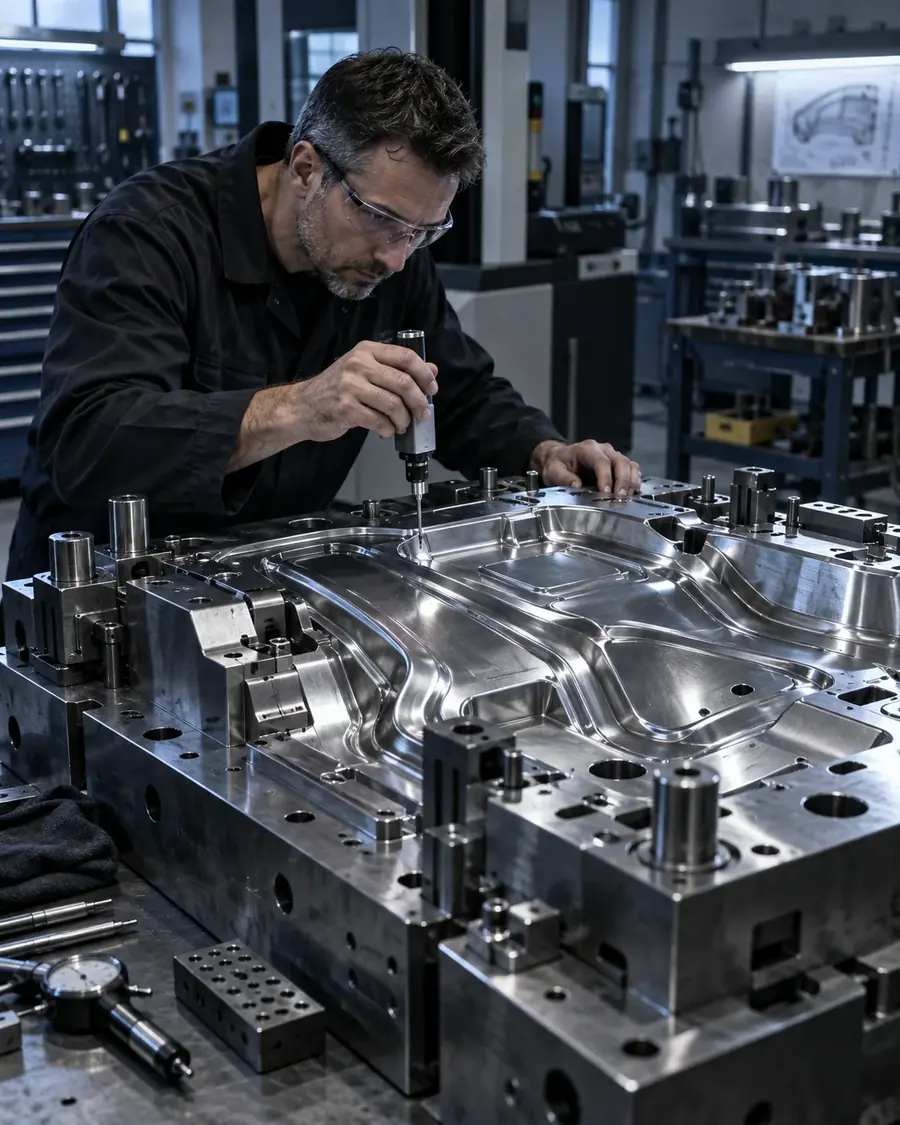
Formed chassis cradle in a stamping press

From skateboard.
To frame.

Battery enclosures, cradles, frames and crash structures in AHSS and UHSS. We engineer the forming route so the formed part keeps the thickness and strength your CAE assumed.

4 wkto first prototype part

The direction

Heavier vehicles. Stronger steels. Less room for error.

Battery mass pushes the structure to get lighter without losing crash, durability or NVH performance.

6,000+lb

Many current EVs weigh this much or more. A typical car or SUV weighs 3,000 to 4,000 lb.

Industry referenceSource: IIHS
37%

Lighter AHSS battery pack structure than the benchmarked average, at 27% less cost, in WorldAutoSteel’s Steel E‑Motive concept.

Concept studySource: WorldAutoSteel via AHSS Insights
~38%

Of body-in-white weight in press-hardened steel: the highest share in a production vehicle as of 2025.

Industry referenceSource: AHSS Insights
20%+

Mubea states tailor rolled products offer more than 20% lightweighting potential per component.

Supplier-statedSource: Mubea

Public industry sources. OEM and supplier examples are not Omnistamp programs.

Skateboard platforms  ·  Electromobility

Skateboards change the rules.

The battery moves into the floor, and the floor becomes the structure. Concept studySource: AHSS Guidelines

  1. The pack is in the load path

    Rockers and cross members protect the cells in a side impact.

  2. Packaging freezes early

    Floor height and pack size fix rail and rocker sections early in the program.

  3. Mass moves low and heavy

    Cradles and mounts carry a heavier vehicle.

  4. One floor, several models

    A shared platform multiplies the cost of a weak part.

  5. Variants arrive in low volume

    Wheelbase and trim variants need parts before hard tooling.

Structure by structure

Four structures. One forming problem each.

01Electromobility

Battery enclosures & skateboards

The pack is the heaviest and most valuable system in the vehicle. The structure around it carries crash, stiffness and sealing at the same time.

Where the industry is going
  • SSAB’s Docol EV concept requires zero intrusion into the cells, even in a side pole impact, and uses a 1700 MPa martensitic bottom structure. Concept studySource: SSAB
  • Hyundai’s E-GMP platform protects the battery with an ultra-high-strength support structure surrounded by hot-stamped parts. OEM exampleSource: Hyundai
Forming reality

Martensitic grades spring back more, and their sheared edges can crack at low edge strain. Large flat trays add flatness and sealing-flange demands.

What we bring

Formability and springback simulation for trays, frames and cross members. Prototype parts and welding fixtures for validation builds.

02Chassis

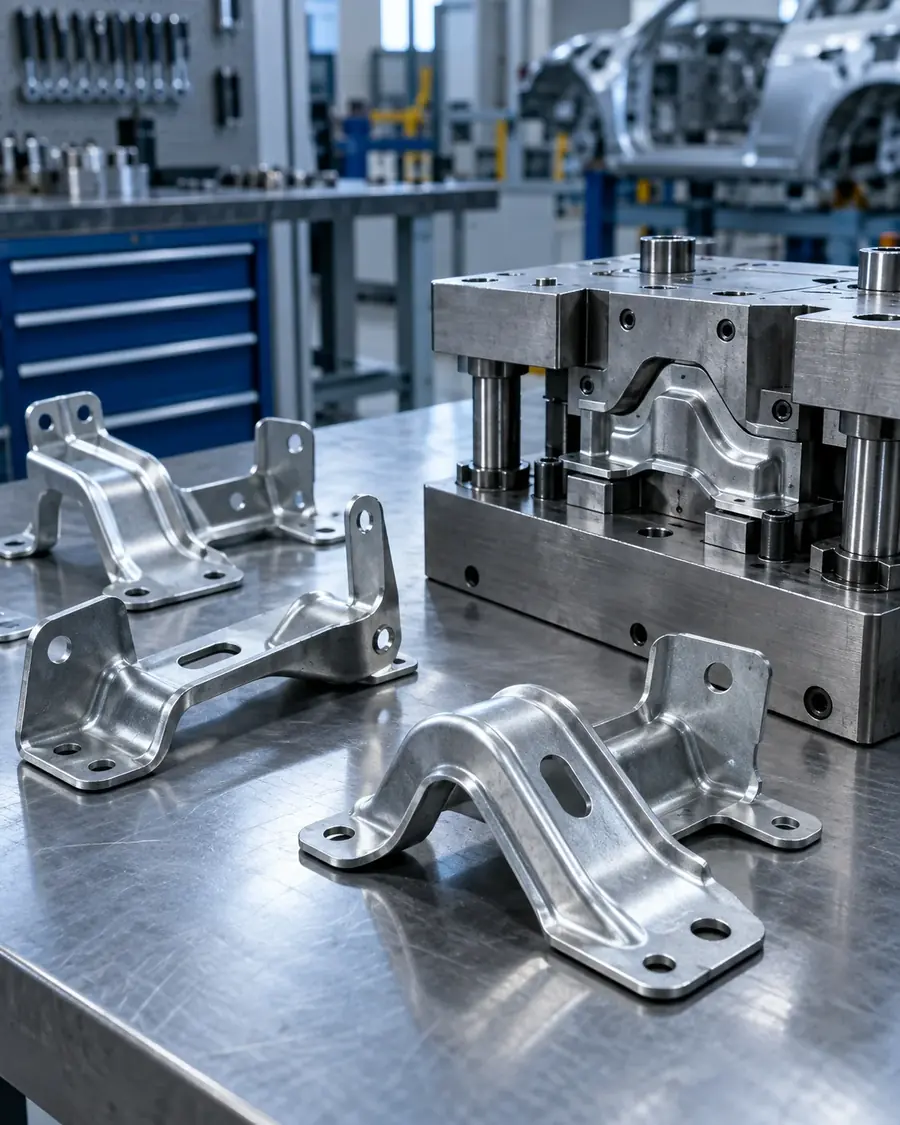
Cradles & subframes

They carry the suspension and the drive units. Durability and NVH are decided at the mounts.

Where the industry is going
Forming reality

Deep sections thin at tight radii, and every step up in strength narrows the forming window. Weld distortion moves the mounts.

What we bring

Stamped and tube-formed members, laser welding and fixturing, and checking fixtures that hold mount positions.

03Frames

Frames & cross members

The backbone of trucks and body-on-frame SUVs. On electrified frames, it also protects the pack.

Where the industry is going
  • Hydroforming is used for frame rails, engine cradles and cross members. In one truck front-end structure it took 31 parts down to 18 and cut weight 31%. Industry referenceSource: AHSS Insights
  • Tailor rolled blanks put thickness only where the load is. Mubea states more than 20% lightweighting potential per component. Supplier-statedSource: Mubea
Forming reality

Long members accumulate twist and springback over their length. Tubes ovalize and thin at the bend.

What we bring

UO forming, hydroforming and Liquid Impact Forming. TRB and TWB studies. Prototype rails and frame builds.

04Crash

Safety cage & crash management

Rockers, pillars and bumper beams decide intrusion. The strongest steels in the vehicle live here.

Where the industry is going
Forming reality

At these strengths elongation drops, and bendability and hole expansion decide what can be formed.

What we bring

Grade and process selection, cold-forming feasibility studies, prototype beams and sections for your test program.

Frame performance optimization  ·  Design for weight & cost

Optimize the frame before you cut steel.

Every lever that takes out mass changes the forming risk. We test each one in simulation while your team checks performance.

Lightweighting levers, typical direction of mass and forming risk
LeverMassForming riskPerformance checkSource
Grade up, gauge downHigher strength allows a thinner gauge.LowerHigherYour CAEIndustry studySource: AISI / Martinrea, GDIS 2019
Tailor rolled blanksThickness varies along the part to follow the load.LowerModerateYour CAESupplier-statedSource: Mubea
Tailor welded blanksGrades or gauges joined before forming.LowerModerateYour CAEIndustry referenceSource: AHSS Insights
Closed sectionsHydroformed, UO-formed or LIF members add stiffness per kilogram.LowerModerateYour CAEIndustry referenceSource: AHSS Insights
Part consolidationOne formed member replaces a multi-piece assembly.LowerHigherYour CAEIndustry referenceSource: AHSS Insights

Typical direction, not a result. Your part decides.

AHSS & UHSS

Where each grade goes.

For the same shape and thickness, AHSS springs back more than mild steel. Edges can crack without significant edge strain. Industry referenceSource: AHSS Insights Industry referenceSource: AISI

AHSS and UHSS grade families: typical uses and forming watch-outs
FamilyWhere it goesWhat to watchSource
Dual phaseDP 600/980B-pillars, tunnels, engine cradles, front subframesSpringback grows with strength.Industry referenceSource: AHSS Insights
3rd GenQ&P 980 and 1180Strength-driven chassis parts. A cold-forming alternative to PHS in some applications.Ductile for its strength, but springback still grows with strength.Industry referenceSource: AHSS Insights
MartensiticMS 1150/1400, up to 1700Rocker outers, side intrusion beams, bumper beamsLowest elongation. Bend and edge limits rule.Industry referenceSource: AHSS Insights
Press-hardenedPHS1500 (22MnB5)Door rings, pillars, battery surround structuresFormed and hardened in the die. Hard to trim and join after hardening.Industry referenceSource: AHSS Insights
Tailored blanksTRB and TWBRockers, side members, cross membersThickness or grade transitions inside one part.Supplier-statedSource: Mubea

Forming meets CAE

Your CAE is only as good as its thickness map.

We don’t run crash, durability or NVH tests. We engineer the formed part for your targets and give your CAE team the as-formed thickness, strain and springback results.

Crash

Adding forming effects to a frontal crash model raised predicted B-pillar acceleration by about 20% and cut predicted steering-column intrusion by about 13%.

Industry studySource: Auto/Steel Partnership via U.S. DOE
Weight

Crash models without stamping effects underestimate the strength of AHSS-intensive structures. A gauge optimization that included stamping effects, with crash targets held, showed a 10% weight-reduction opportunity in the affected parts.

Industry studySource: Auto/Steel Partnership via U.S. DOE
Durability

Forming pre-strain changes fatigue properties such as stress-life and strain-life.

Industry studySource: SAE 2002-01-0640
NVH

Mapping stamping thickness and residual stress into vibro-acoustic models made them correlate better.

Industry studySource: FISITA 2016
Who does what between Omnistamp and your team
ActivityOmnistampYour team
Forming feasibility and simulationOwnsReviews
As-formed thickness, strain and springback resultsDeliversMaps into CAE
Crash, durability and NVH simulationSupplies forming inputsOwns
Physical crash, durability and NVH testsNot in our scopeOwns, or your lab
Prototype parts for those testsBuildsTests
Dimensional and scan reportsOwnsReviews
Design changes from test resultsTogetherTogether

Electromobility  ·  Fast launch

What EV programs ask of suppliers.

  • “First parts before hard tooling.”

    First prototype parts in 4 weeks, from prototype tooling.

  • “Know it forms before steel is cut.”

    Simulation-first feasibility and DFM.

  • “Parts for every wheelbase and trim build.”

    Prototype and low-volume production without production dies.

  • “Range depends on every kilogram.”

    Grade, gauge and tailored-blank studies. Lighter materials can offset battery weight and extend range. Industry referenceSource: U.S. DOE

  • “Steel that competes on cost.”

    Route and material choices made with piece price in view.

  • “New programs need engineering, not only quotes.”

    A team that engineers the part with you.

Die recuts · User-reported · AHSS Insights

Reduced iterations

Fewer die recuts. Faster launch.

Users of forming simulation report die recuts falling from 12 or more to three or four. Springback and sheared edges still need physical proof, so we prove them early, on prototype tooling. User-reportedSource: AHSS Insights

Die recuts from 12 or more down to 3 to 4.

See where we plug into your program

Send the structure. We’ll map the forming risk.

CAD, grade, thickness, targets and the milestone you need to hit. NDA available on request.

Start a project